Waterproof or Breathable: The PFAS-Free Dilemma
Going PFAS-free has usually meant conceding performance. The majority of PFAS-free membranes on the market today is non-electrospun, and the architecture forces a choice. Monolithic membranes/composites are strong barriers to protect against water entry but breathe poorly. Conventional microporous membranes breathe better but compromise water protection. The result is a persistent gap: no PFAS-free membrane on the market today delivers true waterproofing and true breathability in the same membrane construction. The wearer feels it either way — apparel that traps heat and sweat, or vents well until the weather turns.
Electrospun Membranes Challenge the Compromise
At Niber, we built past that compromise. Our PFAS-free electrospun microporous membranes tune fiber diameter and pore architecture at the nanoscale, meeting industry standards for water protection and ultra-breathability in the same construction — rather than trading one for the other.
That capability shows up in the numbers. Every electrospun Niber TPU membrane returns an RET below 1 — RET measures a fabric’s resistance to moisture vapor transfer, where lower values mean higher breathability and anything under 6 is already considered exceptional. Additionally, membrane-level MVTR reaches over 150,000 g/m²/24hr in testing. Once finished into laminates for various end-use activities, the performance can be engineered to meet consumer needs: RET stays well below 6, and water protection is tunable by membrane selection to exceed 10,000 mmH₂O.
The table below places Niber membrane performance against the established benchmarks for PFAS-free membranes. The ratings shown for monolithic/composites and conventional microporous reflect general performance of those membrane types, not specific products. Each leans one way — monolithic rates highly for water protection, low for breathability; conventional microporous does the reverse. Niber’s electrospun membranes rate strongly on both.
| Membrane | Water Protection | Breathability |
| Monolithic/ Composites | ●●●●● | ●○○○○ |
| Conventional Microporous | ●○○○○ | ●●●●○ |
| Niber Electrospun | ●●●○○ | ●●●●● |
The Pore Structure Behind Our Performance
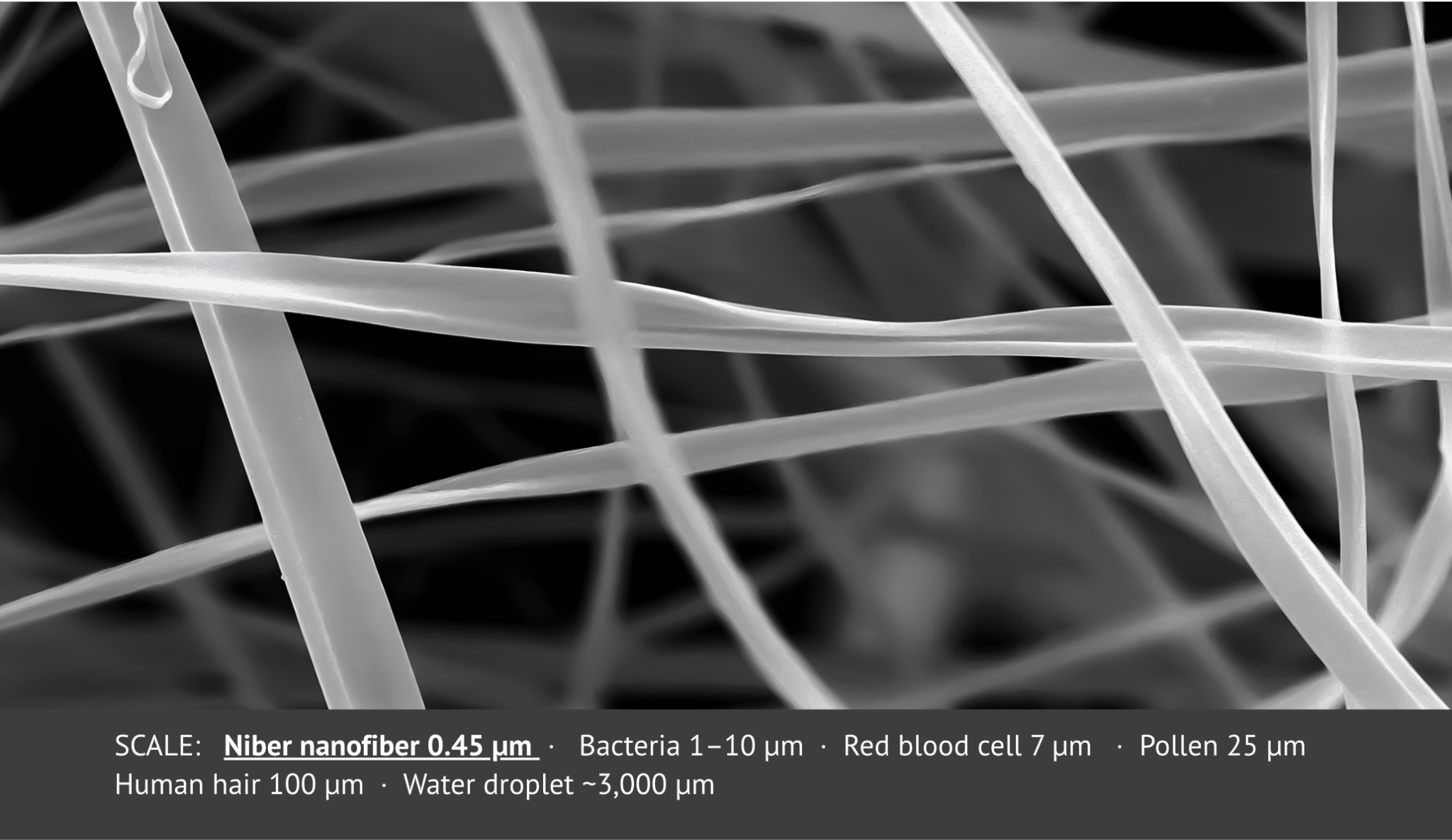
Electrospinning is a nanoscale manufacturing process that uses an electric field to draw polymer solutions into ultrafine fibers. It lays those fibers down one at a time, stacking them into a nonwoven web with an interconnected pore network. Each fiber is 20 times smaller than a bacterium and 200 times thinner than a human hair. That fiber-by-fiber construction is where our edge is built: direct control over fiber diameter, membrane thickness, and pore size at the nanoscale lets us tune exactly how much water the membrane blocks, how much vapor it releases, and how light, soft, and stretchy it feels on the body.
Viewed from above, the architecture reveals itself — a fine web of pores small enough to hold liquid water out, open enough to let water vapor pass through freely. That openness is what drives our exceptional breathability.
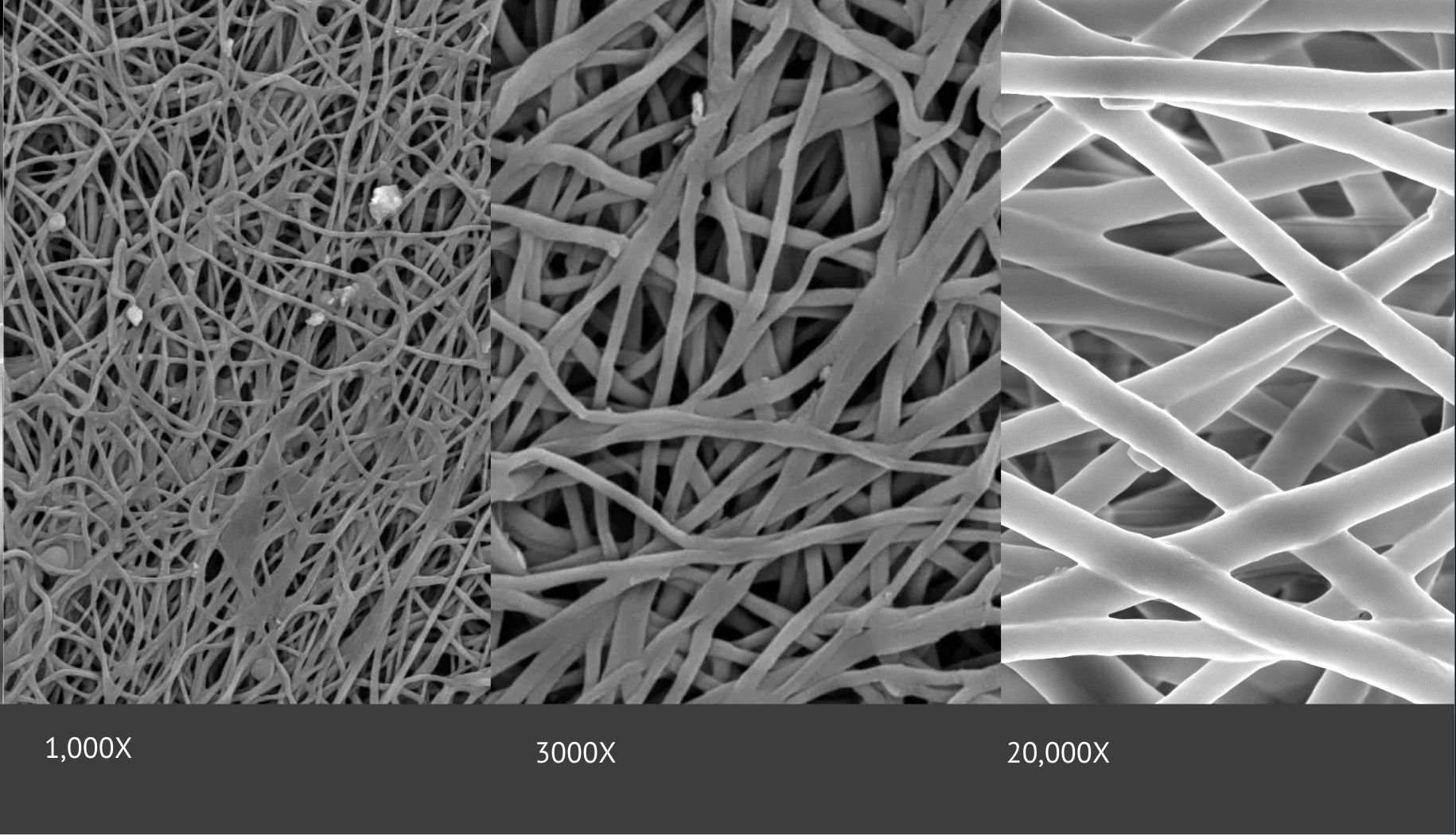
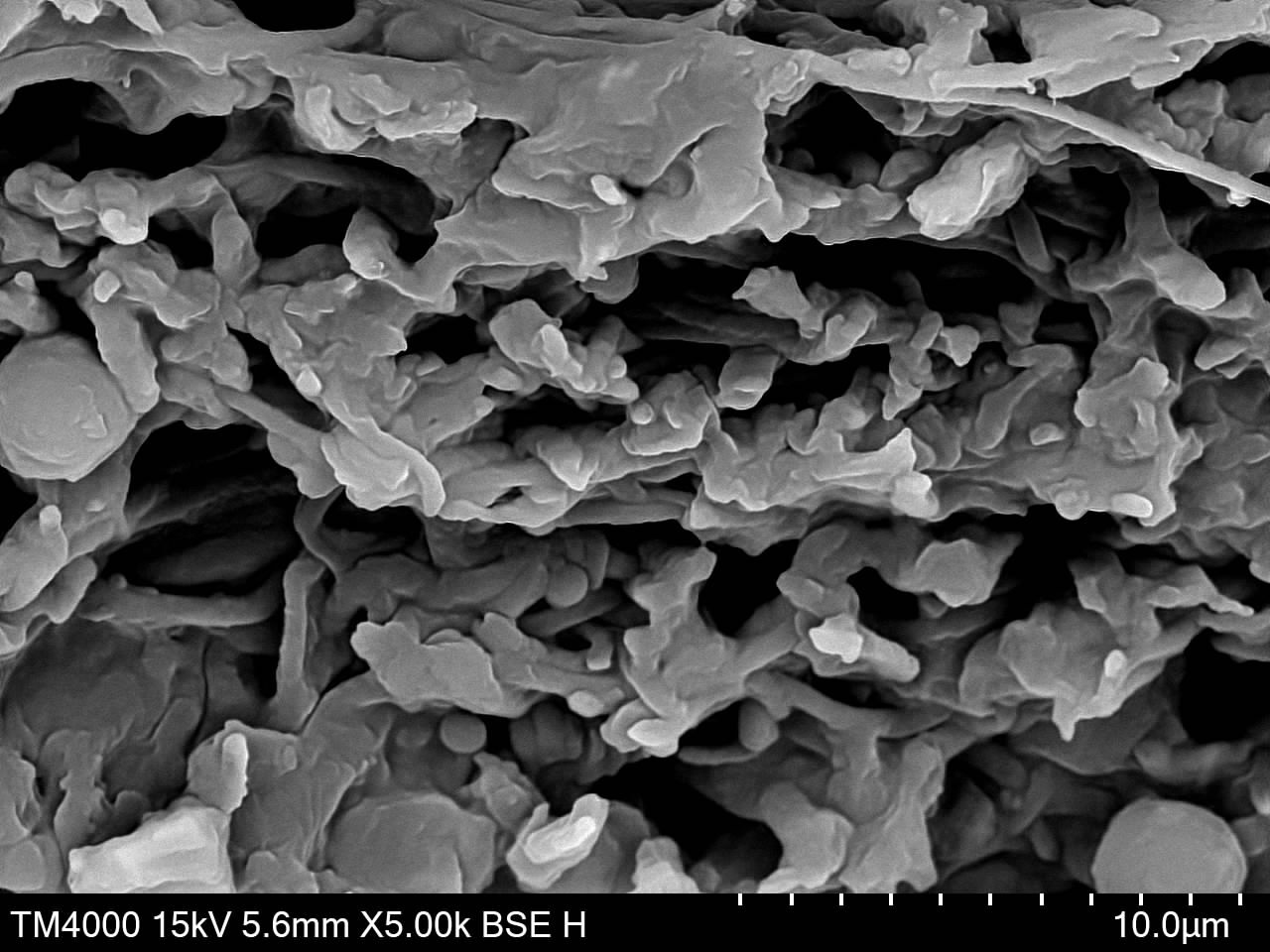
Seen in cross-section, the membrane reveals its depth — layer upon layer of nanofibers built into a tightly interwoven wall. The pores threading through it are far smaller than a water droplet, so even under pressure, water cannot push through. That is where the membrane’s waterproof protection is engineered.
Ultra-Breathability, a New Standard for Comfort and Protection
Waterproof breathable apparel has long protected people from the elements. But protection has always carried a catch. When the body works hard, sweat vapor cannot escape fast enough, and moisture builds inside the garment. The rain stays out; the wearer ends up warm and clammy anyway.
Ultra-breathability is how our electrospun membranes close that gap. Moving vapor out at RET below 1 — far faster than conventional membranes — cuts the heat and sweat buildup that has long defined the discomfort of protective apparel. The wearer stays dry from both sides.
That capability opens categories across every industry— agriculture, home textiles, automotive, medical, advanced tech. However Niber’s focus is where ultra-breathability matters most to the person wearing a product, and the center of that focus is the garment. Active outdoor and sportswear are where breathability is felt most directly: products that hold comfort through changing conditions, weather fronts, and shifting effort levels — from the first speed climb to the final sprint. Alongside garments, the same platform extends into professional apparel, where safety and defense uniforms rely on comfort to sustain performance over long shifts, and into footwear, where trapped heat and moisture have long been the unresolved pain point in safety, casual, and performance categories.
Closing the Gap Between Compliance and Performance
The move to PFAS-free is still young, and early solutions have forced a compromise — either on the performance the market expects or on the supply reliability the business demands. Our platform closes that gap. Compliance is built in: our membranes are engineered PFAS-free from the polymer up, ready for tightening regulation and removing a major source of exposure for the brands we work with. Supply is dependable, with commercial-scale manufacturing sized to fill the capacity vacated by legacy PFAS chemistries. And performance is uncompromised — ultra-breathability and waterproof protection delivered together, not balanced against each other. Compliance, capacity, and performance in a single platform: that is what the next generation of performance materials looks like.
The pressure to make this shift is not slowing down. Across the US, the EU, and beyond, PFAS regulations tighten year over year, reshaping what brands can manufacture, sell, and source. For the full scope of what these changes mean for the textile industry, see our breakdown of the PFAS regulations driving the transition here.